
You are looking for a position as a welder or want to know more about the profession. What are the tasks involved? What training do you need? And where will you be working? Find out this and more about work as a welder in our blog.
What are the activities involved in working as a welder?
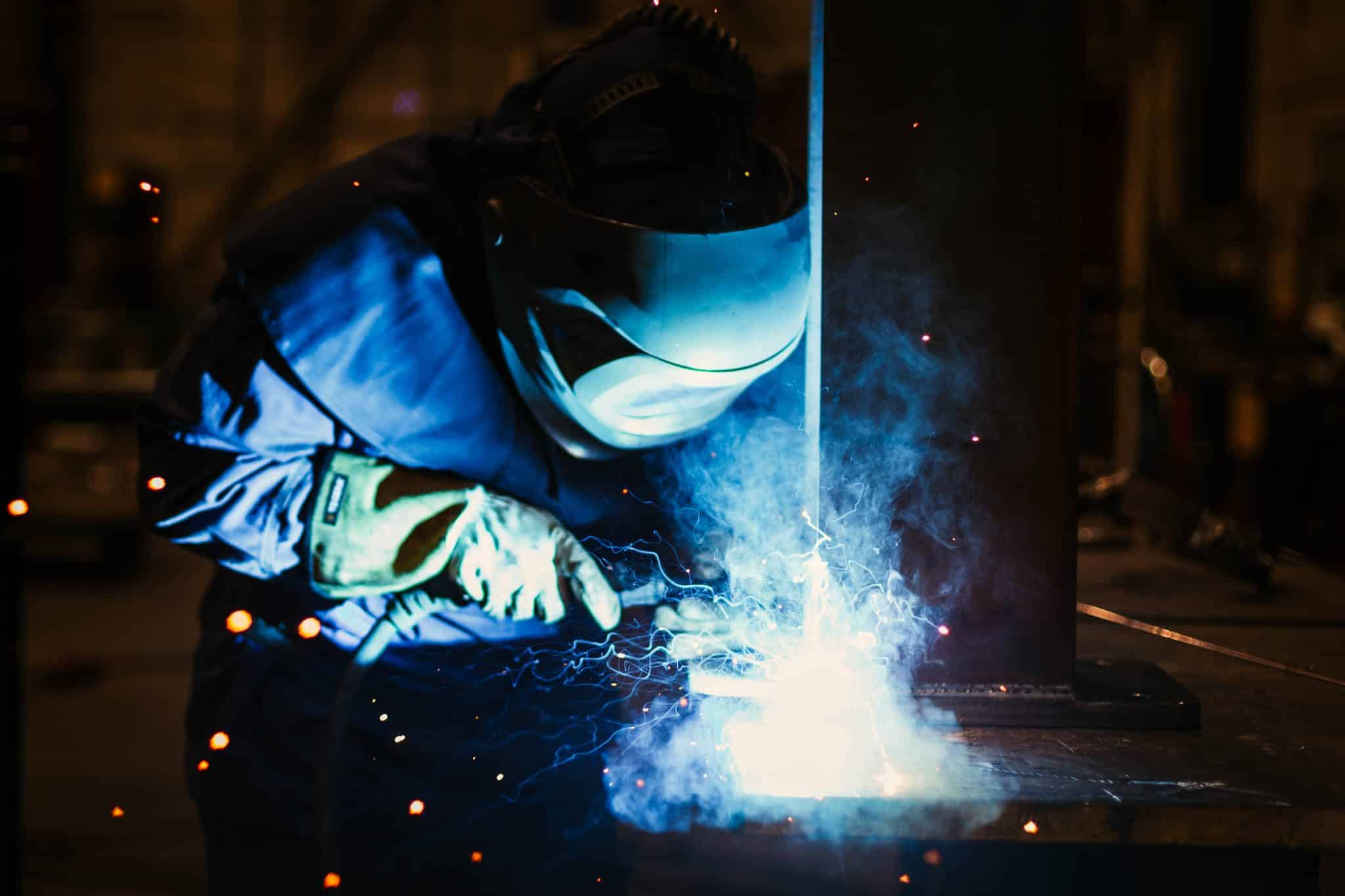
In this position, you will work with welding techniques that connect parts together. Working with materials such as steel, aluminum and stainless steel is daily business for you. For example, you will weld machines and vehicles together, from small projects to large constructions. A welding machine, special welding goggles and protective clothing are your best friends as a welder.
Specifically, what work can you expect?
- Welding materials together
- Reading technical drawings and making sketches
- Being up to date with the latest safety requirements
- Maintain and clean materials and tools used
- Perform other work such as sawing, drilling and grinding.
Within welding, you have several techniques. Examples are Tig welding and Mig/Mag welding. You can also specialize in these. For example, Tig welding is intended for more precise welding, while Mig/Mag welding with a higher welding speed is suitable for repetitive and large-scale work.
Where does a welder work?
You will find a welder working a lot at workshops or construction sites in the metal industry. Especially metal processing companies in, for example, machine construction or shipbuilding employ welders. What are the working hours as a welder? Often during the week and during the day. If a company works with shifts, you get extra allowance for that.
What is your salary as a welder?
What you earn as a welder depends on your training and experience. On average, the salary is between €2,000 and €3,000 gross per month; sometimes it is higher.
What training do you need for work as a welder?
To work as a welder, you need training as a welder, such as an intermediate vocational training for basic welder (level 2) or all-round welder (level 3). During such a training you gain more knowledge about important materials and information such as their melting points and thermal properties. In this profession, practical experience is especially important. You learn by doing it a lot.
After basic training, you can choose to further specialize within the welding profession, if that is where your interests and ambitions lie.
What certificates can you obtain as a welder? These include the B-VCA certificate, a certificate for safety, health and environment. This is often mandatory when working on construction sites. Furthermore, you can get a welder's qualification from the Dutch Institute for Welding Technology.
As a welder, you need skills such as precision, focus, perseverance and the ability to work both independently and as part of a team, for example with draftsmen, engineers, work planners and assembly workers. Technical insight is also important. You know how something is put together and how to assemble it. Furthermore, you must be able to work under pressure; keep up the pace without making mistakes.
Working in permanent employment or as a self-employed person?
You want to work in permanent employment as a welder. Is that possible? Yes it is! But what if you end up as a self-employed welder? That's no problem either. Within the work as a welder you can work both as an employee and as a self-employed person.
Getting to work as a welder through demt-flex
Discover the many benefits of working as a welder at demt-flex. You can work in permanent employment or as a self-employed worker. You will always work in a pleasant, dynamic environment with plenty of opportunities for further development and growth. In addition, you can count on good terms of employment. Take a look at our vacancies and our freelance work offer.